Biometric vs Mobile App Attendance — Which Is Better for Indian Schools in 2026?
A principal in Jaipur installed ₹3 lakh worth of fingerprint scanners at her school's entrance last April. Six months later, during monsoon season, the machines started malfunctioning — humidity caused false rejections, and 200 students stood in a growing queue every morning while the guard manually noted names in a register.
Meanwhile, a school in Coimbatore equipped its 45 teachers with a mobile attendance app. First week: seamless. Third week: a teacher accidentally marked the entire Class 8B as present while her phone was in her bag. Nobody caught the error for two days.
Both schools wanted better attendance tracking. Both invested money and effort. Both hit problems that nobody warned them about.
This post gives you the real picture — not a sales pitch — so you can make the right call for your school.
How Most Indian Schools Still Track Attendance
Before we compare biometric and mobile solutions, let's acknowledge the baseline: most Indian schools still use paper registers.
The teacher calls out names. Students say "present." Someone else answers for half the class. The register gets filled — sometimes during the period, sometimes after school, sometimes from memory. Monthly reports take days to compile.
The problems are well-documented:
- 12–15 minutes lost per period to roll-calling
- Proxy attendance is trivially easy
- Parent notifications are nonexistent or delayed by hours
- Data is unreliable — teacher handwriting, ink smudges, missing registers
Both biometric and mobile app systems solve these problems — but in fundamentally different ways, with different trade-offs.
Biometric Attendance: The Full Picture
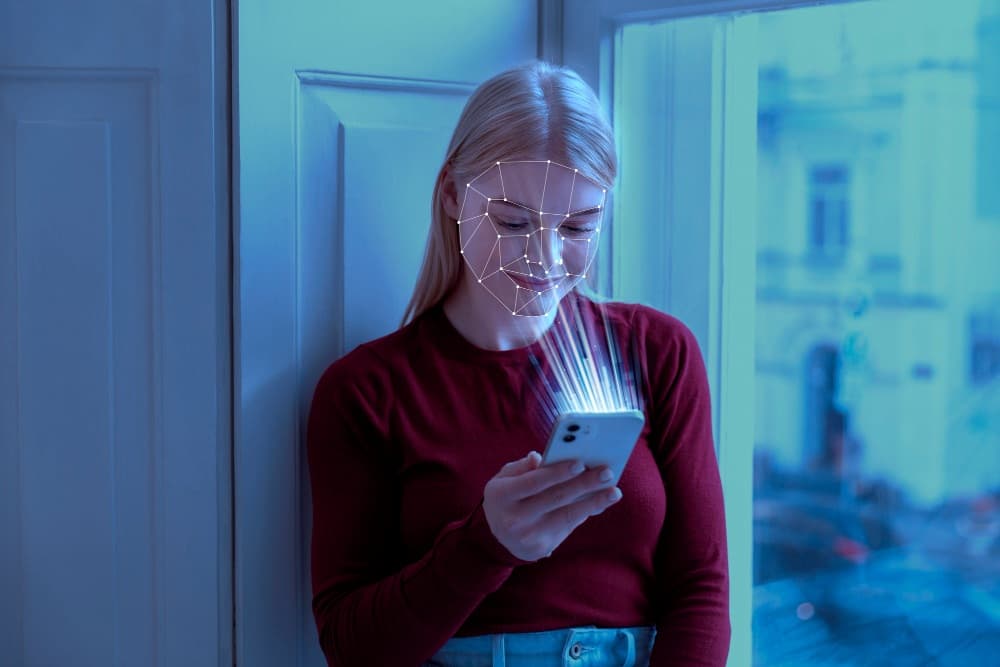
Biometric systems use unique biological identifiers — typically fingerprints or facial recognition — to verify student identity.
How It Works in Practice
Students queue at entry points equipped with biometric devices. Each student scans a fingerprint or looks at a camera. The system matches the biometric input against stored profiles and records attendance with a timestamp.
The Genuine Strengths
Eliminates proxy attendance entirely. This is the killer feature. You cannot send your friend to scan your fingerprint. For colleges with UGC's 75% attendance mandate, this is non-negotiable. Engineering colleges in Pune and Hyderabad rely heavily on biometric for this reason.
Removes teacher involvement. Attendance happens at the gate — teachers don't need to do anything. No app, no tapping, no classroom time spent.
Creates a verifiable audit trail. Every entry is biometrically confirmed. During board inspections or RTI queries, the data is irrefutable.
The Real Drawbacks
High upfront cost. A decent fingerprint scanner costs ₹12,000–25,000 per device. A school with 4 entry points needs 8–12 devices (peak-hour throughput requires multiple scanners). Add installation, networking, and a server — you're looking at ₹2–4 lakhs initial investment.
Throughput bottleneck. A single fingerprint scanner processes 15–20 students per minute. If 500 students arrive within a 20-minute window, you need at least 3 active scanners to avoid 10+ minute queues. Most schools underestimate this.
Maintenance is ongoing. Scanners get dirty. Sensor pads wear out. Monsoon humidity causes false rejections. Annual maintenance costs run ₹30,000–60,000 depending on the setup.
Hygiene concerns persist. Post-COVID, many parents and teachers remain uncomfortable with shared-touch devices. Facial recognition solves this but costs 2–3x more per unit.
Young children struggle. Primary school students (ages 5–10) often have underdeveloped fingerprints that scanners can't read reliably. Schools report 15–20% failure rates for classes 1–3.
It only tracks entry, not period-wise attendance. A student who enters school at 8 AM and skips the afternoon is marked "present" for the day. Period-wise biometric requires a device in every classroom — prohibitively expensive.
Mobile App Attendance: The Full Picture
Mobile app systems let teachers mark attendance digitally on their smartphones or school-provided tablets.
How It Works in Practice
Teacher opens the attendance app at the start of a period. The class roster appears. Teacher taps to mark each student present, absent, or late. Submits. The entire process takes 20–40 seconds.
The Genuine Strengths
Zero hardware investment. Teachers use their own smartphones. No devices to purchase, install, or maintain. Implementation cost is essentially zero beyond the software subscription.
Period-wise tracking. This is the critical advantage. Mobile app attendance captures each period separately. You can identify students who attended in the morning and bunked after lunch — something biometric entry-point systems cannot do.
Works everywhere, including offline. Good apps (including ours) work without internet. Teachers mark normally; data syncs when connectivity returns. This matters enormously in tier-2 and tier-3 cities with unreliable networks.
Instant parent notifications. The moment a teacher marks a student absent, parents receive an SMS or push notification. Not at end of day — within minutes. This alone drives many schools toward app-based systems.
Faster implementation. You can go live in a week. There's no hardware installation, no wiring, no server setup.
The Real Drawbacks
No biometric verification. A teacher could, theoretically, mark an absent student present. While this is rare (and admin dashboards flag anomalies), the system relies on teacher integrity.
Requires teacher buy-in. If a teacher resists using the app or "forgets" to mark attendance, the data is incomplete. Change management matters — you can't just deploy the app and walk away.
Smartphone dependency. In a small number of schools (typically rural or budget-constrained), not all teachers have smartphones. This is becoming less common — smartphone penetration among Indian teachers exceeds 92% in 2026 — but it's worth auditing.
Accuracy depends on process discipline. If teachers mark attendance 20 minutes into a period, late arrivals may be incorrectly marked absent. Timestamp controls help, but they need to be configured and enforced.
The Hybrid Approach: Best of Both
The most effective schools in 2026 aren't choosing one or the other — they're combining both.
Hybrid model:
| What | How | Why |
|---|---|---|
| School entry | Biometric (fingerprint or face) | Confirms physical presence, creates gate log |
| Period-wise attendance | Mobile app by teacher | Tracks actual class participation |
| Bus boarding | RFID or mobile check-in | Ensures transport safety |
| Parent notifications | Automated from app system | Real-time absence alerts |
This layered approach gives you biometric verification where it matters most (physical entry) and mobile flexibility where biometric is impractical (inside classrooms).
Cost for hybrid: Biometric at 2 entry points (₹60,000–1,00,000) + app subscription (₹30,000–50,000/year for a 1,000-student school) = significantly less than full biometric coverage.
Decision Framework: Which School Should Choose What
There's no universal answer. The right choice depends on your school's profile:
Choose Mobile App Primarily If:
- Your school is K–8 with younger children (biometric failure rates are high)
- You need period-wise tracking for board compliance
- Budget is under ₹1 lakh annually for attendance tech
- You're in a tier-2 or tier-3 city where hardware maintenance support is limited
- You want to go live within 2 weeks
Choose Biometric Primarily If:
- You're a college or senior secondary where proxy attendance is a serious problem
- You have UGC/AICTE compliance requirements mandating biometric verification
- You have dedicated IT staff for device maintenance
- Your budget accommodates ₹2–4 lakhs upfront plus annual maintenance
- Entry-point tracking (not period-wise) meets your needs
Choose Hybrid If:
- You're a K–12 school spanning primary to senior secondary
- You want both entry verification and period-wise tracking
- You're a CBSE or ICSE school preparing for NEP 2020 compliance with comprehensive data requirements
- You run multiple branches and need centralized monitoring
What Campus 24x7 Offers
Our attendance management system supports all three approaches:
- Mobile app attendance with 30-second period-wise marking and offline capability
- Biometric device integration — we support major Indian fingerprint and facial recognition hardware
- Hybrid configuration — biometric at entry, app in classrooms, unified dashboard
The system sends instant parent notifications, generates board-compliant reports, and integrates natively with fee management, transport, and report card modules — no separate database, no manual reconciliation.
Not sure which approach fits your school?
Talk to our team → we'll recommend based on your school size, budget, and goals.
Frequently Asked Questions
Can we start with mobile app and add biometric later?
Absolutely. This is the approach we recommend for most schools. Start with mobile app attendance in the first term. Once teams are comfortable with digital attendance, evaluate whether biometric at entry points adds value for your specific context. Our system supports adding biometric devices at any time without disruption.
What if our internet is unreliable?
Mobile app attendance works offline. Teachers mark attendance normally on their phones. When connectivity returns (even briefly), data auto-syncs to the cloud. Schools in Rajasthan, Uttarakhand, and rural Maharashtra use our app daily in low-connectivity areas without issues.
How do we prevent teachers from marking proxy attendance on the app?
Three safeguards: timestamp controls (marking must happen within the class period window), geo-tagging (marking can only happen from within school premises), and admin dashboards that flag statistical anomalies (e.g., a teacher marking 100% attendance for 30 consecutive days).
Is facial recognition better than fingerprint for biometric?
Facial recognition avoids touch (hygiene benefit), works better for young children, and is faster at scale. However, devices cost 2–3x more, and accuracy drops in poor lighting. For most schools, fingerprint remains the practical choice. Facial recognition makes sense for premium schools with budget flexibility.