The Mother's Pride School: what stops working at a thousand students
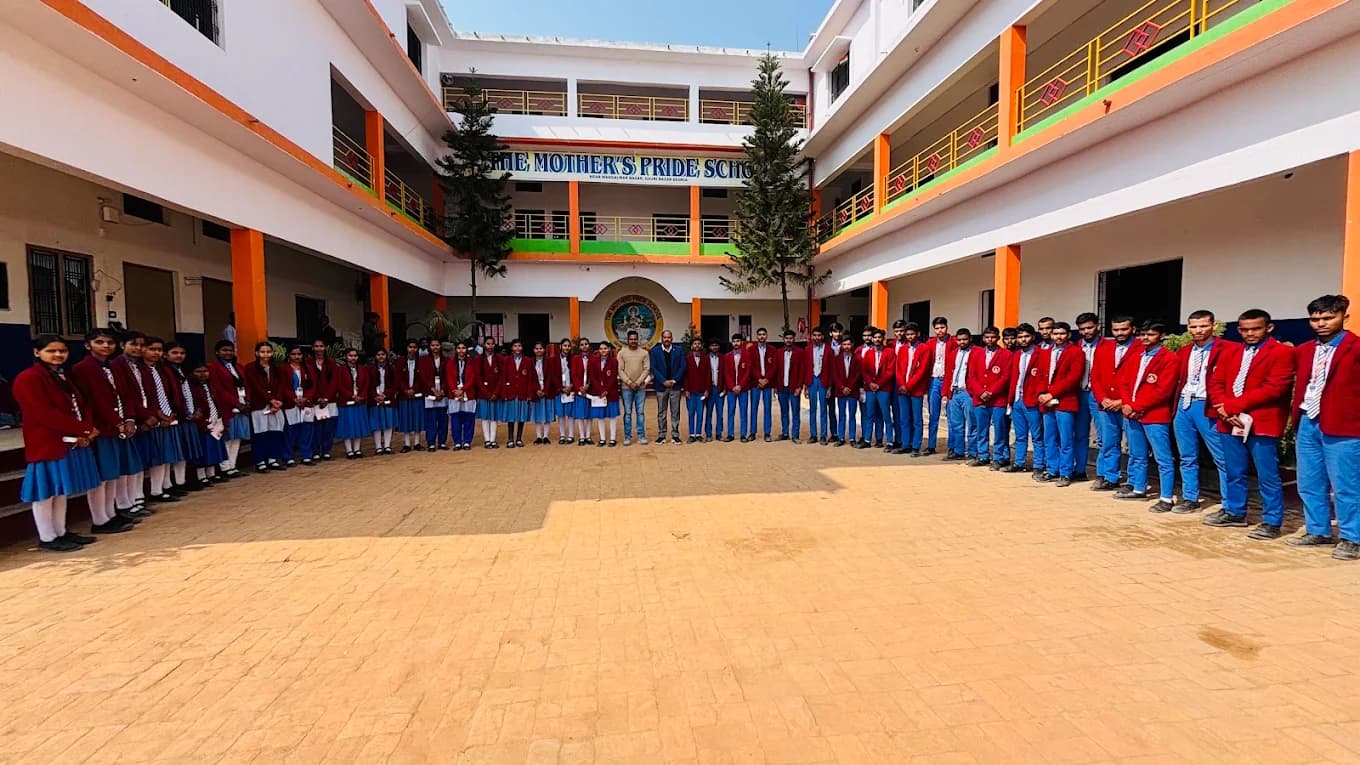
| School | The Mother's Pride School |
|---|---|
| Location | Deoria, Uttar Pradesh |
| Students | 1000 |
| Board | CBSE |
| Staff | 45 |
| Plan | Growth |
| Live since | June 2026 |
| Modules in use | Students, Staff, Attendance, Examinations and report cards, Fee collection, Library, Transport, Parent communication |
Deoria sits in the far east of Uttar Pradesh, near the Bihar border, about sixty kilometres from Gorakhpur. The Mother's Pride School has 1,000 students and 45 teachers, which makes it the largest school on this page and the first one we have written about that is not on our entry plan.
That size matters more than it sounds, and it is the reason this story is different from the other three. The schools in Kadapa, Jhajjar and Gorakhpur came to us because things were being done on paper. The Mother's Pride School was not especially disorganised. It had systems. The problem was that its systems were built for a smaller school and nobody had noticed the day they stopped scaling.
From keeping track of student attendance to staying connected with parents, having everything in one platform helps our team work more efficiently.
The Mother's Pride School, Deoria
What actually breaks at a thousand students
Not any one process. What breaks is coordination between processes, and it breaks quietly.
At 300 students, the office knows the children. Someone can answer a question about a particular student's fees or attendance from memory, or by asking the one person who would know. At 1,000 students across more sections, with 45 teachers, nobody holds the whole picture. The information still exists, but it is distributed across people, and retrieving it means finding the right person while they are free.
The symptom a school notices is that simple questions start taking a day. A parent rings about a fee adjustment agreed in April with someone who has since changed role. A class teacher needs a student's attendance across two terms. Neither is a hard question. Both now require a search.
This is the point at which a school either adds administrative headcount or changes how records are kept. Most add headcount first, because it is the obvious move, and it works until the next threshold.
Why 45 teachers changes the rollout
Every other school on this page trained between 20 and 30 people. Forty-five is a different exercise, and we would rather say so than imply the same approach scales unchanged.
You cannot gather 45 teachers in one room during a school day without stopping the school. So training ran in groups, scheduled around free periods, which meant the same session delivered several times over a longer period. That is slower and it is more of our time, but the alternative — training the heads of department and asking them to cascade it — is how you end up with four different interpretations of how to mark a register.
The other difference at this size is that you can no longer assume everyone is comfortable with a smartphone app. In a staff room of 45 there will be teachers who have been teaching for thirty years and teachers who have been teaching for two, and the gap in confidence between them is real. The two-week settling period the other schools describe is a bit longer here.
The fee question at scale
A thousand fee-paying students generates a volume of exceptions that a smaller school does not have to systematise. Sibling concessions, staff-ward concessions, agreed instalment variations, part payments, corrections — each one is a trivial decision on its own.
The difficulty is that these exceptions tend to live in the memory of whoever granted them. When that is one person handling 300 students, it works. When it is several people handling 1,000 across a year, the school starts having conversations it cannot resolve, because the only record of an agreement is that a parent remembers making it and the office does not.
Recording the concession against the student at the point it is agreed is unglamorous and it is most of the value. The school's position in a dispute stops depending on who was in the room.
Why Growth rather than Foundation
Two reasons, and it is worth being plain about both because the plan boundary is a real line rather than a sales device.
The first is the cap. Foundation covers up to 500 students and 30 staff. At 1,000 and 45, this school is outside it on both counts. There was no version of this deployment that sat on the entry plan.
The second is iOS. Foundation ships an Android app only, which is the limitation stamped on every other case study on this page. Growth adds iOS, and at this school that mattered: in a thousand-family parent body in a district town, the share carrying an iPhone is small but it is not nothing, and those are often the families most likely to complain about being handed a web link while everyone else has an app.
Growth also brought library and transport into the same system, which is less about scale and more about the fact that a school this size was already running both.
The rollout
The same four steps as the other three schools, with more time allowed at each one.
Meetings first, to understand how the school already works rather than how the software would prefer it worked. Configuration to match that, including the school's own section structure, fee heads and concession rules. Training, in groups, over a longer window than a smaller school needs. Then go-live in June 2026, ahead of the session.
Going live before the session starts matters more at this size, not less. A thousand students admitted and rolled over cleanly at a session boundary is a clean opening roll. The same migration attempted in October means reconciling months of records against a register nobody wants to reopen.
Week one
Longer than a fortnight, and we expected that. With 45 staff, the questions arrive in waves rather than all at once, because people hit their first unfamiliar task at different times depending on what they teach and when they next have to enter marks.
Nothing about that is a failure, but it does change the advice. At a school of this size, the person to worry about is not the one asking questions in week one. It is the one who has not touched the system by week three, because they have quietly carried on with their own register and you will find out in the exam cycle.
Where things stand now
Attendance, examinations and report cards, fees, library, transport and parent communication run through one system, across 1,000 students and 45 staff.
The change worth describing is not that any single task got faster. It is that the office stopped being the bottleneck for questions it did not need to be the bottleneck for. A class teacher can see their own class without asking. A parent gets an answer during the call rather than after it.
This school went live in June 2026. At the time of writing that is a little over one term. We would rather state that than let a reader assume a multi-year track record.
What we still do not do well
No biometric or RFID. Attendance is marked on a phone, by design. At 1,000 students, a school that wants gate-level biometric entry logging is asking for something we do not sell, and that is a more pointed limitation here than at a 490-student school where the gate is quieter.
This is a single campus. The Mother's Pride School runs one site, so nothing in this deployment demonstrates multi-campus consolidation, and we are not going to imply otherwise from a school that does not have branches.
Growth caps at 1,000 students and 50 staff. This school is at the student cap and has 45 of the 50 staff places used. If it grows, it moves to Scale. We would rather that sat on a public page than arrived as a surprise at renewal, and it is the same thing we said about Lotus sitting at the Foundation cap.
What The Mother's Pride School uses
See it with your own data
Bring your class list and fee structure to the demo. Twenty minutes is enough to tell whether it fits how your school already runs.
Book a demo