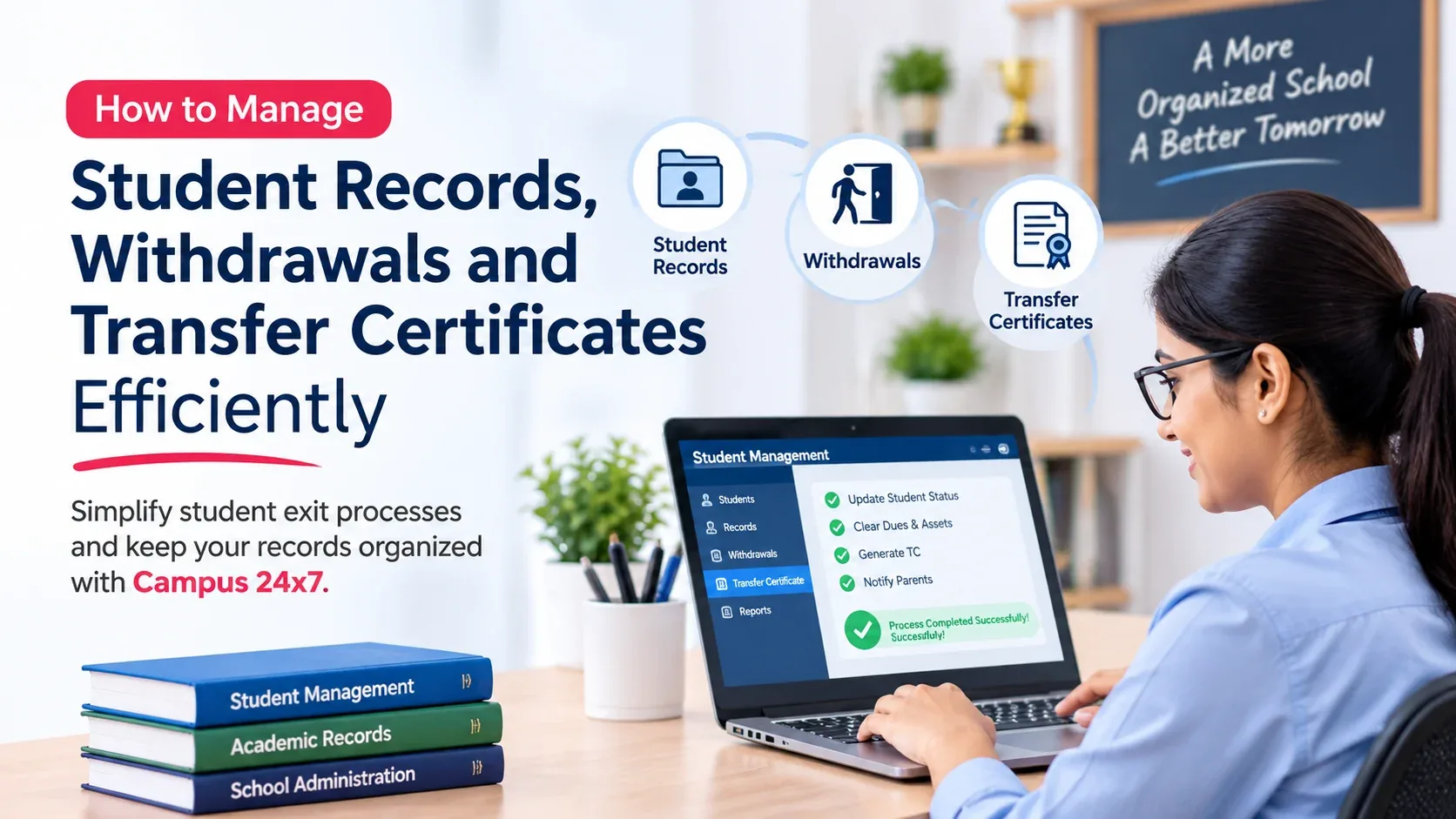
How to Manage Student Records, Withdrawals and Transfer Certificates Efficiently
It's Friday, 2:30 in the afternoon. A father walks into the office: the family is moving to Pune, the new school wants the TC by Monday, and could you please do it today? The clerk says yes, then spends the next hour hunting. The admission date is in the old register. The last result is in the exam cell's file. Someone has to check with accounts. And only after the father leaves does anyone remember the child still needs to be released on UDISE+.
None of this is hard work. It's slow work, and it's slow for one reason: the child's record was never really one record. It was five pieces of paper in four rooms.
This guide is about fixing that, from the day a child is admitted to the day they leave.
What Should Actually Be in a Student Record
A good rule of thumb: anything the school will ever have to print about a child, whether on a TC, a report card or a UDISE+ entry, should already be sitting in the record. If the clerk has to go and find it, it isn't in the record.
| Group | What to keep | Why you'll need it |
|---|---|---|
| Identity | Full name exactly as on the birth certificate, date of birth, gender, photo | Every certificate you issue has to match it |
| Admission | Admission number, date of admission, class admitted to, previous school, incoming TC | Goes straight onto the TC and the admission register |
| Government IDs | Aadhaar (with consent), PEN, APAAR ID | UDISE+ and the child's records across schools |
| Category | General, OBC, SC, ST or EWS, and religion | Scholarships, RTE seats, UDISE+ |
| Family | Father's, mother's and guardian's names, phones, email, occupation | Contact, consent, fee reminders |
| Address | Current and permanent | Transport, letters, records |
| Health | Blood group, plus any allergy or condition staff should know about | Emergencies |
| History | Class, section, roll number and result, year by year | Promotion, TC, board registration |
| Documents | Birth certificate, previous TC, Aadhaar, photos, medical papers | The proof behind every field above |
Two habits save more trouble than anything else on this list.
Never change or reuse an admission number. Not when a child leaves, not when they come back after two years. A returning child gets their old number back, not a new one.
Copy the name and date of birth from the birth certificate, letter for letter. Most TC correction requests we hear about come down to a name that was spelt one way on the admission form, another way on the report card and a third way on the TC.
Where Records Usually Fall Apart
You'll probably recognise a few of these:
The same child exists twice, because they were re-admitted after a gap or because two clerks entered them in the same week. The register says "TC submitted", but nobody can actually find the TC. Parents changed their phone numbers two years ago and nobody updated them. Last year's spreadsheet was reused for this year, so last year's class and result are simply gone.
And the expensive one: children who left months ago are still on the books. They show up on class lists, they keep getting fee demands nobody will ever pay, they inflate your UDISE+ numbers, and their new school can't enrol them properly because you never released them.
Year-End: Promote, Detain, Keep the History
At the end of every session, each child either moves up, repeats or leaves. The mistake is to record that by overwriting the child's class. Add a new row for the new year instead, and keep the old one.
It sounds like a small thing until someone asks, three years later, which section a child was in during Class 7 and whether they passed. With a proper history, that's a ten-second answer.
Promote in bulk, but look at the exceptions one by one: detained students, students switching stream in Class 11, and anyone who left partway through the year. If you're setting this up for the first time, our school ERP implementation checklist walks through the year-end rollover along with everything else.
When a Student Leaves
Children leave for all sorts of reasons. The family moves. Parents pull them out for home schooling or because fees have become difficult. They finish Class 10 or 12 and go elsewhere. Sometimes they just stop coming, and the school has to decide when, under its state's rules, to strike the name off.
Whatever the reason, the same steps close the file properly:
| Step | What to do |
|---|---|
| 1. Get it in writing | A short application from the parent with the reason and the last day the child attended |
| 2. Record the leaving date and reason | On the student's record, not just on that piece of paper |
| 3. Settle accounts separately | Work out dues or refunds, but don't make the TC wait for them (more on this below) |
| 4. Issue the TC | Numbered, prepared from the record, signed by the head of school |
| 5. Enter it in the TC register | TC number, date, name, class, reason |
| 6. Release the child on UDISE+ | Same day, so the new school can pull the record |
| 7. Close everything else | Mark the student inactive, end app logins, take them off the bus route, stop fee demands |
| 8. Keep the record | Archive it. Never delete it. Someone will ask for a duplicate TC in 2034 |
The Rules on Transfer Certificates
This is where schools get into trouble, so it's worth being precise.
The TC has to be issued immediately. That's not a courtesy, it's the law. Section 5(3) of the Right of Children to Free and Compulsory Education Act, 2009 says the head of the school a child is leaving must issue the transfer certificate immediately. It also says a delay in producing the TC can't be used to delay or refuse the child's admission at the new school, and that a head teacher who sits on a TC can face disciplinary action under their service rules.
You can't hold a TC hostage for fees. We know this is the one that stings. But High Courts have said it clearly and more than once: a TC is not a debt-recovery tool. The Kerala High Court ruled in 2023 that a school can't withhold a TC just because fees are outstanding and gave it seven days to issue one. The Telangana and Delhi High Courts have said much the same. If money is genuinely owed, the school can still recover it, through a civil claim if it comes to that, just not by holding on to the child's certificate.
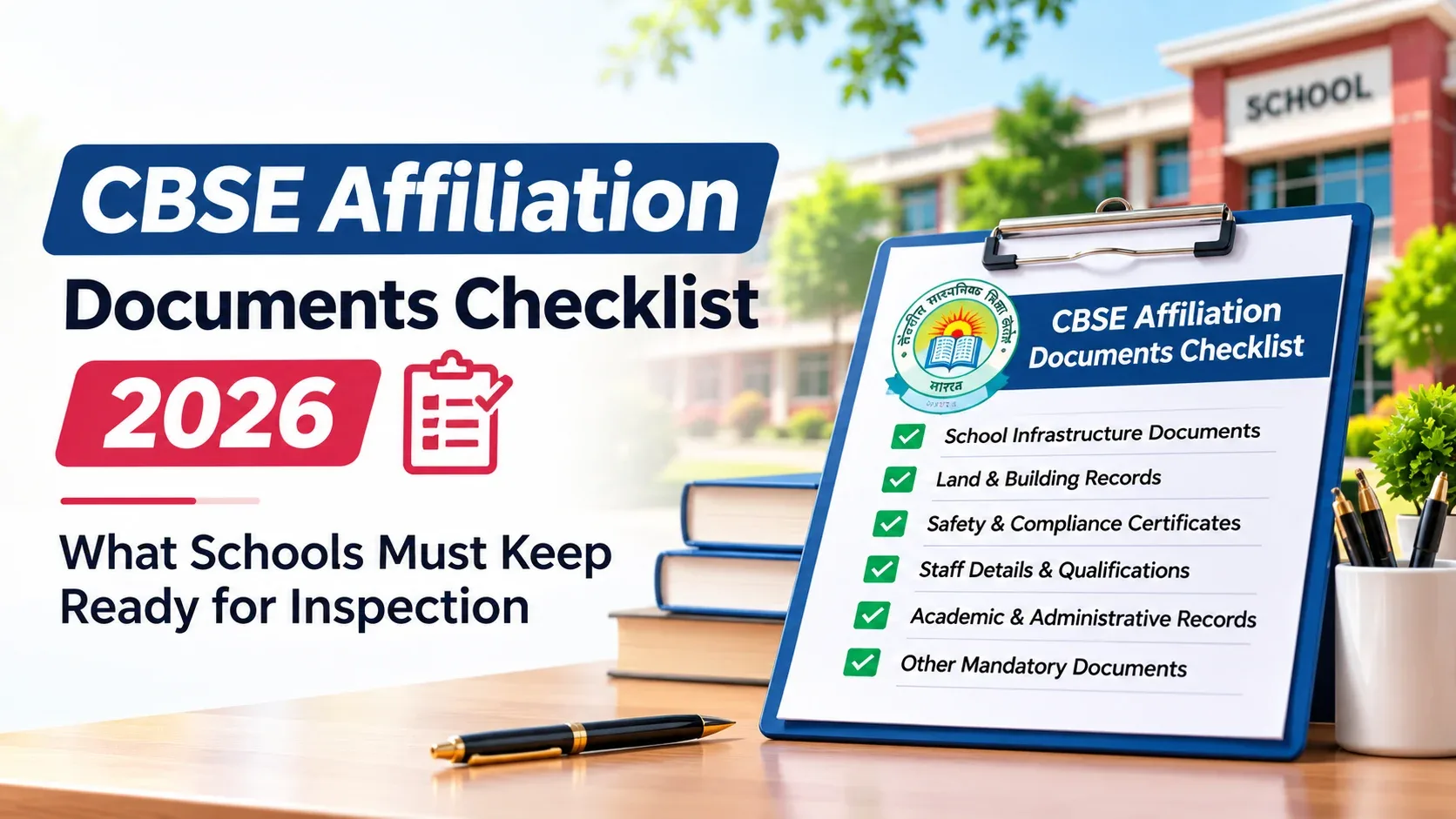
CBSE schools have to publish the TCs they issue. The CBSE Affiliation Bye-Laws require copies of issued transfer certificates on the school website, as part of the mandatory disclosures. Our CBSE affiliation documents checklist covers the rest of what you need to keep ready.
Formats differ by state. Many states and boards have their own TC or school leaving certificate format. If yours does, use it, and check every year that it hasn't changed.
What goes on a TC
| Field | Watch out for |
|---|---|
| TC serial number | Unique, continuous, never reused or skipped |
| School name and affiliation or UDISE code | Exactly as registered |
| Student's name, parents' names, date of birth | Matching the admission record, letter for letter |
| Admission number and date of admission | From the admission register |
| Class last studied, and whether promoted | With the academic year |
| Date of leaving and reason | As given in the parent's application |
| Conduct | Short and factual |
| Date of issue, signature, school seal | Head of school |
Don't Forget UDISE+
On UDISE+, a child's record belongs to their old school until the old school lets it go. When a child leaves, you mark them as left and enter the TC details. That moves the record into what's commonly called the Dropbox, and the new school imports it from there. The child's PEN stays the same across schools and even across states, so the new school should always import the existing record, never create a fresh one.
When the old school skips this step, the new school is stuck. It can't enrol the child on UDISE+ and ends up chasing your office, or the district MIS coordinator, for weeks. The fix is simple: release on UDISE+ the same day you issue the TC, every time.
Mistakes We See Again and Again
- Writing a TC by hand from memory instead of from the record
- Reusing a TC number, or skipping one
- A name or date of birth on the TC that doesn't match the birth certificate
- Holding back the TC until fees are paid
- Forgetting the UDISE+ release
- Leaving the child on the bus list, the fee list and the class WhatsApp group
- Deleting a former student's record to "clean up"
How Campus 24x7 Handles This
In Campus 24x7, a student comes in through a five-step admission form or a CSV import, and that creates a single record: personal details, class, parents and guardian, a unique admission number and uploaded documents like the birth certificate, Aadhaar card and previous TC. Sensitive things like Aadhaar and documents are visible only to staff who are allowed to edit student records, and teachers only see students in the classes they teach. Parents can see their child's details in the app and correct a few of them, such as the address and blood group.
Each new session adds a row to the student's history. You can promote, detain or graduate a whole class at once, with a preview before anything is saved. When a child leaves, you create the TC from their record. It gets a number automatically, you fill in the dates, reason, conduct and remarks, and you can save it as a draft before issuing it as a PDF with the school's logo. The TC register lists every certificate with its number, class, reason and date. Issuing a TC marks the student inactive, closes the student's app login and stops new fee invoices. Creating and issuing TCs, along with changes to student records, are logged in the audit trail.
There are things it doesn't do yet, and we'd rather you know now:
- There are no PEN or APAAR ID fields yet, and the UDISE+ release happens on the UDISE+ portal itself.
- You can't export the student list or edit students in bulk yet, and imports take CSV, not Excel.
- The TC doesn't check for pending fees, which lines up with the rule above. Any unpaid invoices stay on the student's fee record.
- Issuing a TC doesn't take the student off their bus route. Do that in the transport module.
- It doesn't generate bonafide, character or study certificates.
If you want to go deeper, read our guides to a student information management system and school document management. Moving years of records out of Excel? Start with school ERP data migration. And every plan comes with two months free, which is plenty of time to run one admission and one TC end to end before you decide.
Frequently Asked Questions
How soon must a school issue a transfer certificate?
Immediately. Section 5(3) of the RTE Act says the head of the school must issue the TC immediately when a child moves, and that a delay in producing it can't be used to delay or deny admission at the new school.
Can a school refuse a TC because fees are pending?
No. The Kerala, Telangana and Delhi High Courts have all held that a school can't withhold a TC over unpaid fees. The school can still recover genuine dues in other ways, but it has to issue the TC.
What is the difference between a TC and a school leaving certificate?
In most states they're the same document with different names. Both record that the child has left and what their status was at the time. Some boards and states prescribe their own format and title, so go by your board's rules.
What is a TC register?
A running list of every TC the school issues: the TC number, date, student's name, admission number, class and reason for leaving. It's what lets you issue a duplicate or answer a verification request years later.
How do I transfer a student's record on UDISE+?
The old school marks the student as left with the TC details, which releases the record to the UDISE+ Dropbox. The new school then searches by PEN and imports that record rather than creating a new one.
Should a school delete records of students who have left?
No. Mark them inactive and keep the record. Former students come back for duplicate TCs, verification and old marks years later, and CBSE schools are required to keep an admission and withdrawal register.
The rules above reflect the RTE Act, 2009, reported High Court judgments, the CBSE Affiliation Bye-Laws and UDISE+ practice at the time of writing. TC formats and UDISE+ procedures vary by state and change over time, so check your board's and state's current requirements.